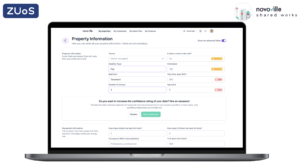

How Birmingham City Council Improved Retrofit Delivery Using Shared Works
Improving the energy efficiency of homes is central to the UK’s net zero ambitions, and to tackling fuel poverty. However, for the local authorities tasked with delivering programmes (such as ECO4/GBIS, or Warm Homes), this work often involves complex admin, fragmented data, and coordination across multiple contractors and community groups. It’s not simple.
Birmingham City Council (BCC), the UK’s largest local authority, faced all these challenges. Managing applications, evidence, contractor engagement, and resident communications across different systems created delays and placed increased pressure on council teams.
To address this, BCC took a great step. They joined the Connected Places Catapult’s DIATOMIC Accelerator, with a clear aim: to explore how digital tools could reduce administrative burden and improve coordination across retrofit delivery. As part of the programme, BCC worked with Novoville to deploy Shared Works, a collaborative web platform designed to support end-to-end retrofit coordination for local authorities, contractors, and residents.
As a test case, Shared Works was configured to support the live delivery of ECO and GBIS programmes. The platform provided a single system for council teams and contractors to manage applications, upload evidence, track progress, and communicate with residents.
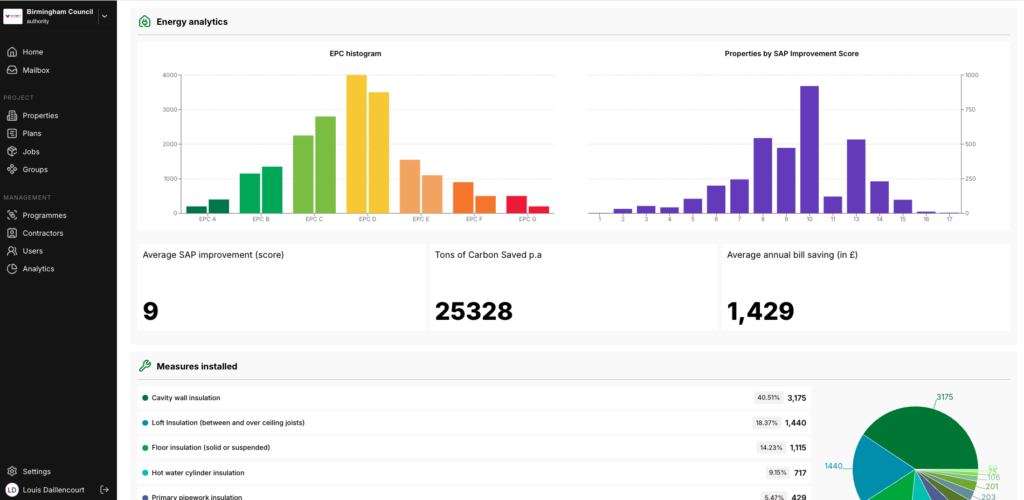
Using Shared Works, BCC was able to:
- Process over 700 applications with Shared Works
- reduced administrative effort by 65% for council officers, reducing reliance on spreadsheets, emails and manual tracking
- Improve contractor coordination, with delivery partners uploading evidence directly into the system
- Better engage over 40% of residents through its resident portal.
Looking forward
Following the ECO and GBIS trial, Birmingham City Council is looking at how Shared Works can support additional retrofit activity, including Warm Homes, and other council-led programmes.
There is also potential to apply the platform’s coordination and data capabilities to wider housing and asset management use cases.
BCC’s experience demonstrates how practical digital coordination can support retrofit delivery, reducing administrative pressure for councils, improving clarity for delivery partners, and creating a more straightforward experience for residents. Once again, we recognise the important role that technology accelerators such as Connected Place Catapult can play to foster these innovations.
Read the full Connected Places Catapult case study to learn more about how the trial was delivered and what this means for future retrofit programmes.